
The Letters of Jane Kenyon and Alice Mattison Reveal Vulnerability and Fortitude
August 06, 2026
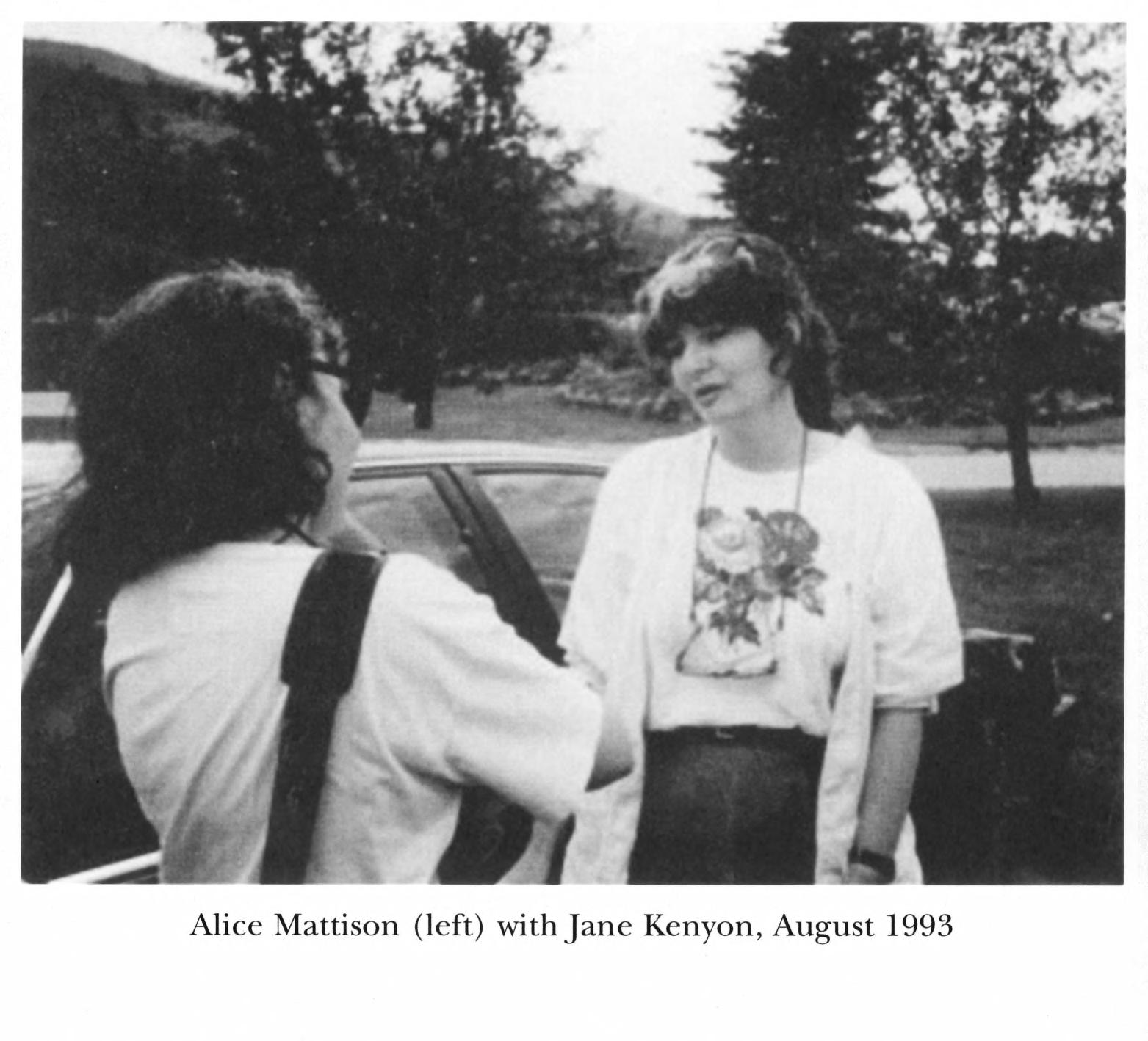
Beginning in 1979, the writer Alice Mattison corresponded with the poet Jane Kenyon until Kenyon’s death from leukemia in 1995. It’s a conversation between close friends about becoming writers while living their everyday lives, with Kenyon’s life marked by complex psychiatric and health issues and Mattison’s by adjusting to vision loss due to macular dystrophy. As such, these letters offer, among other things, insight into the emotions, challenges, and vulnerabilities associated with losing vision.
What Clever Friends: The Selected Letters of Jane Kenyon and Alice Mattison, ed. by Chad Wriglesworth
“Sometimes friendship is everything,” writes Alice Mattison in her Foreword to What Clever Friends: The Selected Letters of Jane Kenyon and Alice Mattison. By the end of this 508-page book of correspondence between Kenyon and Mattison, both of whom became prominent literary figures, it is clear that what Mattison means could not have been expressed more succinctly or accurately. The kind of friendship she and Kenyon had was a lifeline between self and world, a critical conduit for faith in their personal aspirations of creative excellence. They could celebrate each other’s successes, like getting published in the New Yorker, without either feeling jealous. They could share their work-in-progress and know they’d get an honest response, sometimes disconcertingly so. They could complain about editors, assigning nicknames to the quasi-powerful figures who rejected them, and thus lighten the sting. They could chatter on about the things that made them happy, because they wanted the other to know about them: in Kenyon’s case, being a member of the South Danbury Christian Church, caring for her garden, walking with her dog; in Mattison’s, going for a run, serving at a soup kitchen, taking a break to go on a day trip to New York with her husband.
Importantly, they could also confide in one another without fear of stigma about the health vulnerabilities that impacted their careers beginning early on—in Kenyon’s case, bipolar disorder that at times made it hard for her to function; in Mattison’s, vision loss that made it difficult for her to read, which is one of the central tasks of her profession. That they were able to share so much with one another—work, love, fear—helped them both navigate the challenges of the writing life.
This book’s primary story is that of a friendship unfolding over time between two extremely perceptive women that opens in 1979 with an overture of generosity from one writer to another (“Don’t panic, [Alice], your book is going to be wonderful,”) and closes on a note of grief as one woman contemplates saying goodbye to the other (“dearest [Janie], you have to feel all right about my crying… Some people never get anybody worth crying for, at least not very hard.”) It is beautiful to watch the first brief letters Mattison and Kenyon exchange evolve into a weekly correspondence full of warmth, humor, and even the occasional tension after disagreements. But this story of friendship is inextricable from a second, equally immersive story of two young women growing into extraordinary writers, in part because of the support they gave one another.
Kenyon and Mattison met in 1979, when Kenyon attended a reading by Mattison at a poetry fair in Cambridge, Massachusetts. At the time, Mattison was 37 and Kenyon was 32. Mattison lived in New Haven with her husband, Edward, and three young sons. Kenyon lived in New Hampshire with her husband, Donald Hall, the famous poet (and man of letters) who was nineteen years older. Both women were aspiring writers—or perhaps more accurately, emerging writers, since they’d already spent years dedicated to their craft and had begun to see success. Kenyon had published her first book of poems, From Room to Room, in 1978. Mattison, who was still writing poetry but would soon transition to fiction, would publish her first book, Animals (poems), in 1980.
At the reading, Kenyon introduced herself to Mattison. A few months later, she wrote to Mattison on behalf of Alice James Books, a cooperative press run primarily by the poets it published, to let her know that Mattison’s first book, selected for publication, was in production. Mattison began taking a train every few weeks from New Haven to Boston to attend meetings and pitch in at the press. The women started spending time together and liked one another. Almost a year after Kenyon wrote to Mattison, Mattison wrote to Kenyon. It’s the second letter in the book, and though brief, it shows that the two women had become more closely acquainted, since Mattison was confirming that Kenyon would visit her while the Mattison family was on vacation in New Hampshire.
Kenyon and Mattison growing as friends—and writers
Kenyon’s notes are generally shorter than Mattison’s, especially in the first years of their correspondence, with intense sentences like flares in the dark: “Your visit was a very bright day in my summer,” she writes in one, and, in reference to the passing of her father, “One becomes less afraid of living by seeing somebody through a death.” Mattison’s, meanwhile, are reassuring, filled with everyday details and gentle humor, which Kenyon also evidenced a gift for. About her sons, for instance, Mattison writes that “They’re getting big enough that [having them underfoot this summer] doesn’t represent much real physical labor, other than pouring them drinks…” And about the editorial meetings at Alice James that Kenyon had missed: “We spent a lot of time discussing what the work requirement actually is… so there isn’t so much vague guilt lying about the place.”
By 1982, they had been commenting on one another’s work, and Kenyon felt a strong enough artistic connection to Mattison to suggest that they start a writing group together with the writer Joyce Peseroff, who lived outside Boston. The three women began meeting several times a year to read and respond to one another’s work, usually at Peseroff’s home, since it was the most conveniently located. Given that they were developing their careers at a time when female artistic ambition was not exactly encouraged, they all needed, as Mattison says, “a kind of permission to write.” Kenyon “took rejection personally,” Mattison recounts, which sometimes made it hard for her to work. She was also living with a poet so famous he inevitably overshadowed her, and she was seeking to foster her unique vision independent of his influence and opinions. Mattison, meanwhile, had failed to secure a full-time teaching position she’d applied for, which undermined her confidence in herself. She was also struggling with the feeling that it was “greedy” to want to write—and publish—more than she already had.
Few, if any, of their letters fail to reference their work as writers. Amid talk of husbands, children, dogs, gardens, the changing seasons, vacations, walks and runs, they respond to drafts of the works-in-progress that they have shared with one another, their observations insightful, serious, and cogent despite the air of dashed-off brevity they sometimes have. “You write short poems in which the dramatic situation has not been whittled away to nothing,” Mattison offers Kenyon, while Kenyon says, “I know you will help me remove the nineteenth century from my new poems. I’m counting on you, Alice!” They write about the books they’re reading and where they’re seeing success in their careers—or not. There seems to be not the slightest whiff of jealousy or competition between them; they feel comfortable sharing good fortune and bad. In reference to a grant she’s received from the National Endowment for the Arts, Kenyon writes, “I tell you I know who my friends are. “When something good happens they’re not mean about it. You, and dear Joycie [Peseroff] are pleased for me.” Not long after Kenyon’s good news, Mattison writes with the opposite sort of news—repeated rejection. “I have been feeling tense…frightened of writing something I know nothing about, worried about my poems, which fly back in the mail to me no matter where I send them.”
Had Mattison and Kenyon had access to Instagram and Facebook back in the eighties and nineties, there was plenty they might have posted to confirm their success: attending writing residencies and receiving fellowships, placing poems and stories in the best magazines in the country, including The New Yorker, publishing books with top-notch presses, getting reviewed by The New York Times, and so much more that a literary writer today would still yearn for and count as a marker of having “arrived.” But through their letters, we see the other side, too: the poems and stories that editors dismiss, sometimes harshly; the grants and awards they never receive; the sting of reviews that are less than laudatory; the worry over low book sales and sparse audiences at readings. In this way, this book of once-private letters is a gift, a deeply reassuring testament to the ups and downs of even a successful writer’s life.
Kenyon and Mattison’s medical issues
It was not simply the trials of being writers that Mattison and Kenyon sought support from one another for; they shared other vulnerabilities in their letters, particularly medical issues that, as their careers advanced, threatened both women’s productivity. Their friendship had been developing for a little over three years when Kenyon was the first to broach the subject of her health: “We are not having a calm summer, I’m sorry to report… I began to have what I thought was a heart attack—extreme, I mean breath taking—chest pains. D. rushed me to the hospital where the doctor said he thought it was a spasm of the esophagus… .” These symptoms, along with many others (dizziness, balance problems, exhaustion), were the result of an inner ear infection (vestibular neuronitis) and would afflict Kenyon off and on for the rest of her life. This was in addition to severe depression that would be diagnosed as bipolar disorder in 1989. From that point on, Kenyon took an ever-shifting cocktail of psychiatric drugs that never seemed to afford her the balance she sought.
Within a month of Kenyon’s writing to Mattison about what she thought had been a heart attack, Mattison wrote to Kenyon to say she was having “trouble with [her] eyes, which [was] scaring [her] a little.”
“I’m farsighted,” she goes on, “and I know I need better reading glasses and have an appointment for a week from Friday, but my vision in my right eye has become distorted and it makes reading very difficult; the words are wobbly.” Mattison did not yet know it, but these were the first signs of macular dystrophy; she was only 41.
“I am brooding about your eye,” Kenyon writes back. “What is happening?”
If they connected with one another when they first met in part because they were seeking validation and support in a world where women’s creative ambitions were not widely supported, they now also sought support from one another to adapt and persevere in the face of difficult personal challenges. For the next several months, their letters, in addition to describing their writing lives, detailed their health concerns. A great deal has been written about Kenyon’s struggles, which became the subject of some of her poems, including “Having It Out With Melancholy,” and were explored by Dana Greene in her 2023 biography of Kenyon: Jane Kenyon: The Making of a Poet. Suffice it to say that her bipolar disorder, especially, “shaped the plot of her life,” as a review of Greene’s biography put it. As evidenced by her frank letters to Mattison, Kenyon herself was aware of this. On the other hand, although Mattison has written about her eye trouble, only with the publication of these letters is it clear that her career as a celebrated writer of short stories and novels depended on her adapting to diminished vision.
In the story of Mattison and Kenyon’s artistic friendship, we glean a lot about what it takes to become a writer. In the story of their health vulnerabilities, or the “state of their somas,” as Kenyon puts it, both women show how to persevere in the face of conditions that can have a potentially devastating impact on a person’s life and work. Because Kenyon’s medical and psychiatric states have already been explored in detail elsewhere, and apropos of our focus at the Vision & Art Project, the rest of this discussion will focus on Mattison’s experience of losing her central vision. In her letters to this close friend, she documents in real time, and in a way we rarely have access to, the progression of her disease, from noticing something was wrong to visiting eye doctors to adapting. The letters also document how she felt as she came to terms with having a serious eye condition that would never get better, including being scared, worried, and grief-stricken.
In October 1983, Mattison writes a lengthy letter to Kenyon, updating her on her eyes. She has seen her ophthalmologist, who has told her that, in some way, her macula has been compromised. The macula, Mattison explains to her friend, “is what controls fine vision, central vision—people who lose the use of the macula can still see but cannot read.” She describes how frightening the prospect of not being able to read is (reading is a central task of a writer!), and, indeed, when her vision trouble first began, she couldn’t make out the words on the page. “However,” she explains, “my brain started—I guess this is what it is—to adjust to this new misinformation it gets and I began to be able to read again.” She goes on to describe what happens if she closes her left eye (she can make small objects disappear and cannot read), and what happens with both eyes open (letters shimmer, but she can read, though not for very long and only if the page is highly legible). In an observation that many people with medical issues can likely identify with, she relates that she was sent to a retina specialist from whom she fails to get the clarity of understanding she had hoped for: “I have just written to her asking her to let me know more specifically what she thinks it is: I have a ravenous hunger for precise language about this.”
The eye trouble imposes itself on Mattison’s career in difficult, unwelcome ways. At that point, she was still writing poems (she would soon abandon poetry for fiction). She began writing about her eyes, but wasn’t sure it was a good subject, even as her preoccupation with what was happening to her vision blocked her desire to write about anything else. Also, her eyes often hurt after she did only “regular stuff,” like reading, which, uncharacteristically, made her feel “very low” and caused her to perseverate over figuring out exactly what precipitated episodes of pain and discomfort. Could she only work for a limited number of days before succumbing to strain? Was there something specific she had done to bring on the discomfort? Other days, she is acutely sensitive to light. “I almost didn’t have the Will to Work, Jane,” she laments, “(And it’s all we have!!!).” She is in pain, takes aspirin, has her husband block the light from the windows that she gazes out of when she works, hoping that will reduce her discomfort.
“Let us forget our troubles in concentrated work”
The title of the book, What Clever Friends, comes from Kenyon’s letters and alludes to the primacy of writing as one of the book’s storylines. When Mattison or Peseroff was honored with publications or awards, Kenyon would write, “what clever friends I have.” Another phrase from Kenyon could also have served as a title, especially in reference to the “interesting ailments,” as Mattison called them, that these two women faced: “Let us forget our troubles in concentrated work.” Mattison acknowledges that, ultimately, they had to get down to business and write. “I think we will both feel better in a few months,” she writes, “that my left eye, which has taken over pretty much completely in reading, will get accustomed to the strain and I’ll be more comfortable; that your insides will learn to interpret correctly the information they are getting.”
For the next few years, Mattison reports making practical, emotional, and artistic adjustments to minimize the impact of her vision loss. To reduce the pain of light sensitivity, which bothered her not only when she was outside but even when she was teaching because of the glare of fluorescent lights, she buys a pair of glasses with sunglass sections on the sides. She finds ways to read, albeit slowly, without overtaxing her eyes (large print books up close, for example), though one of the more poignant moments in the letters is a passage in which she notes that Kenyon, who, like her, is reading War and Peace, is racing through the book more quickly than Mattison can dream of doing. In a testament to how adversity can be clarifying, Mattison, who had struggled over feeling “greedy” about spending so much time writing, embraces it as one of the most important parts of her life and begins to turn down requests to do things she doesn’t want to do to save her focus for her fiction. Kenyon, too, confesses to a similar consequence of her medical issues: “I plan to get out of three organizations in the next month or so. I can’t do everything I did when I was well… I feel giddy at the prospect.”
By 1987, four years into her ordeal, Mattison has found a new normal, it would seem, and rarely mentions her vision problems, which, even as she becomes a successful writer, she seldom shares with anyone other than Kenyon, because she didn’t want to be the writer with eye trouble who got turned down or missed out on important opportunities (her vision loss would make it hard for her to get a job teaching writing, though she eventually did so and served for over two decades as a mentor in Bennington College’s renowned low-residency creative writing program). In the end, as the two women adapted, the letters move from Kenyon and Mattison processing their losses to tracking their growing understanding of their vocations within the context of human frailty. “Writing is a vocation you have whether you want it or not, whether you are depressed or not,” Mattison writes. “I take your words to heart,” Kenyon responds. “I’m a writer, so I’ll write!”
What Clever Friends: The Selected Letters of Jane Kenyon and Alice Mattison, ed. by Chad Wriglesworth, is available as an EBook or paperback from the University of Michigan Press.
Bios
Jane Kenyon (May 23, 1947 – April 22, 1995) was an American poet, essayist, and translator. Before her untimely death from leukemia at age 47, her poems were frequently published in The New Yorker and other prestigious literary magazines. She published four poetry collections during her lifetime. Posthumous publications include A Hundred White Daffodils (a collection of her essays, translations, and newspaper columns) and her collected poems. Her work is often described as simple, spare, and emotionally resonant.
Alice Mattison (born March 18, 1942) is an American writer. She has published thirteen books (primarily short stories and novels, but also essays and poetry) and taught fiction for many years in the low-residency MFA program at Bennington College. She has written about viewing art with low vision and contributed the introductory essay to the Vision & Art Project’s 2024 anniversary exhibition catalog. We also interviewed her in 2022 about why, as a person with low vision, she seeks out three-dimensional and abstract works of art when she visits museums.
Chad Wriglesworth, an English professor at St. Jerome’s University within the University of Waterloo, edited this book, wrote a scholarly introduction, and provided contextualizing notes throughout. Wriglesworth had long admired Kenyon’s poetry and reached out first to Donald Hall around 2015, and then to Alice Mattison, about his idea of working on a book featuring Jane Kenyon and Alice Mattison’s correspondence. After gaining Hall’s enthusiastic assent and Mattison’s hesitant one, he spent many years editing the letters and preparing them for publication.
Leave a Comment