Sophie Calle: Something Missing?
September 05, 2026
After spending more than a decade researching artists with vision loss due to macular degeneration, an eye disease that damages central vision and can lead to blindness, we saw Sophie Calle’s seminal and controversial work The Blind this summer as part of the exhibition Sophie Calle: Something Missing? at the Louisiana Museum of Modern Art in Denmark. Like the disability activist Joseph Grigely, we found The Blind to be a “beautiful failure.” In this 1986 project, Calle interprets through her own vision the words of “the blind,” as she calls them, about what they see as beautiful, which could be taken as erasing their agency. This is antithetical to our perspective on empowering artists with vision loss at The Vision & Art Project and reminds us that, as Grigely says, society tends to see the disabled “not a people at the center of being, but a dysfunction.” At the same time, many of Calle’s other works in this exhibition ask profound questions about presence and absence, sight and sightlessness, the visible and invisible.
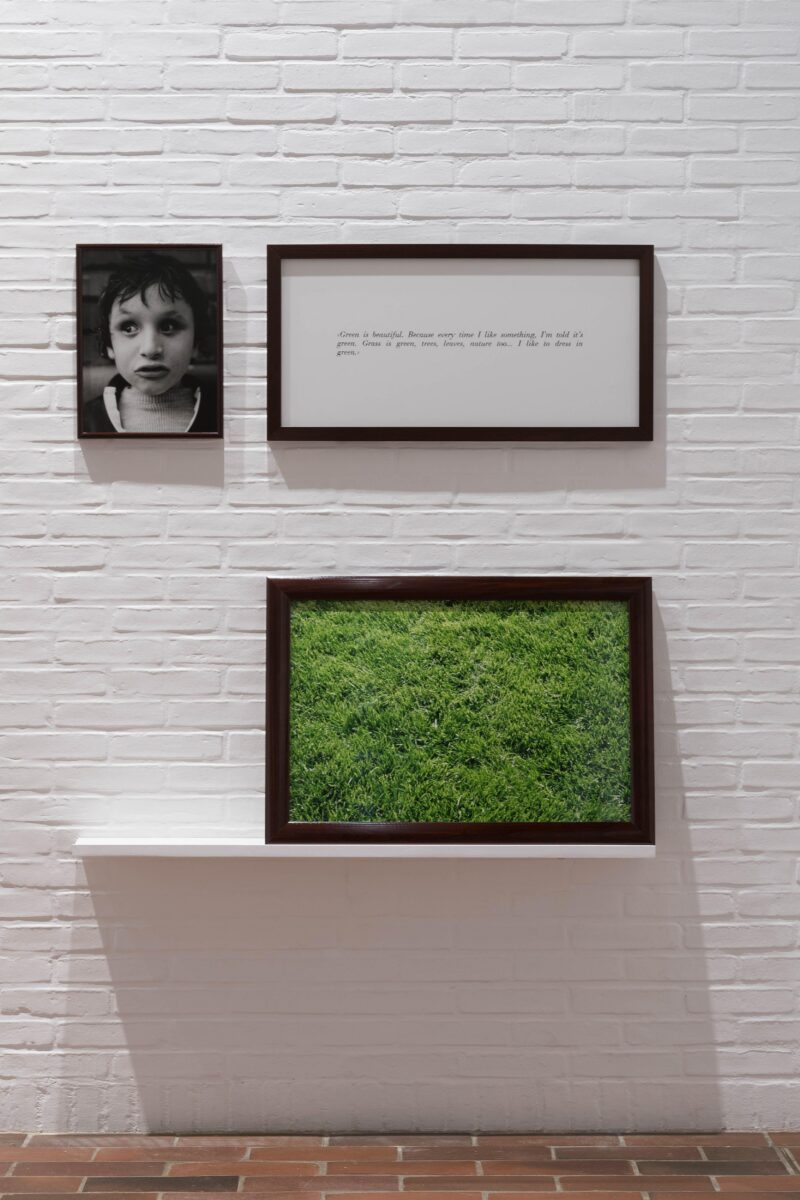
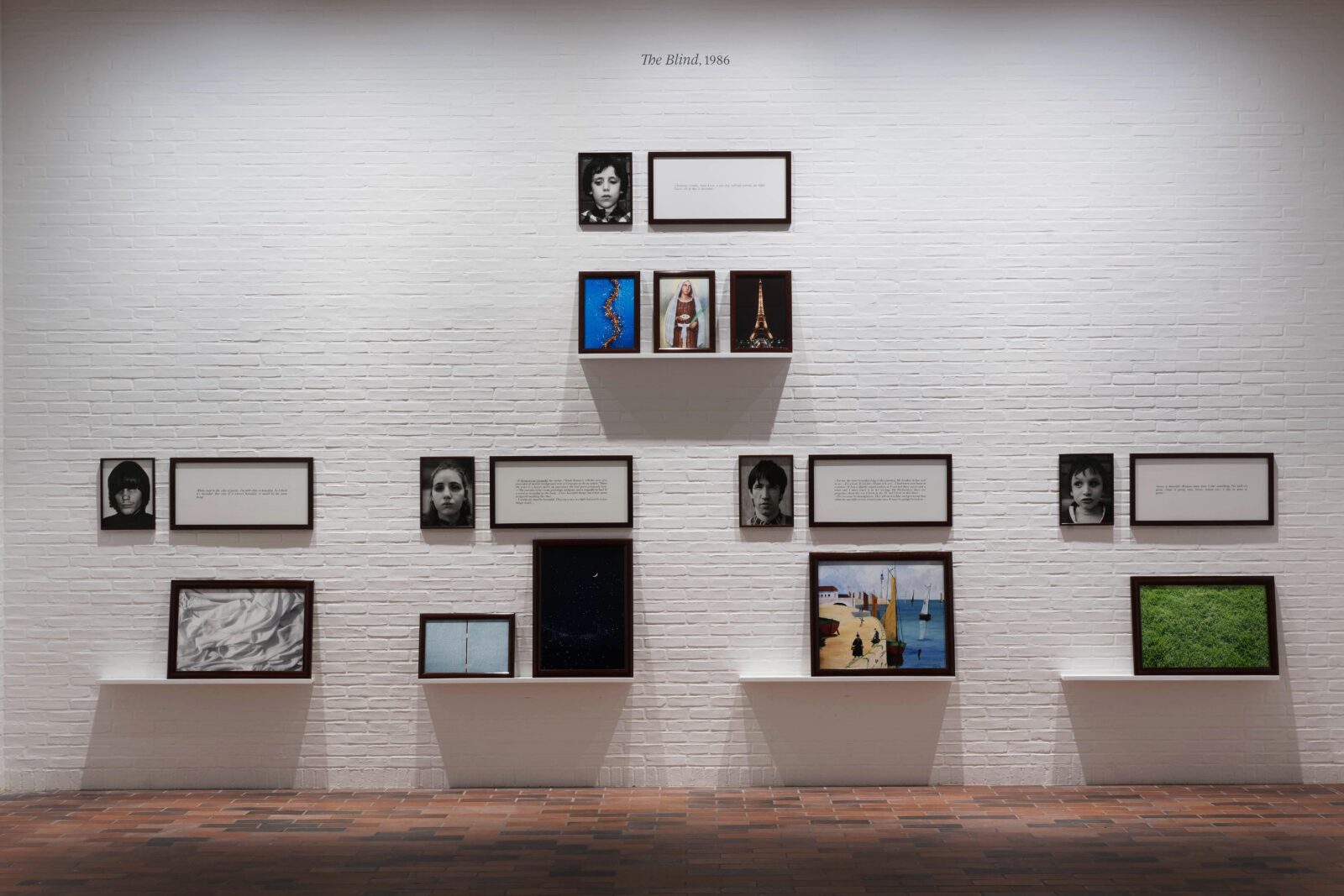
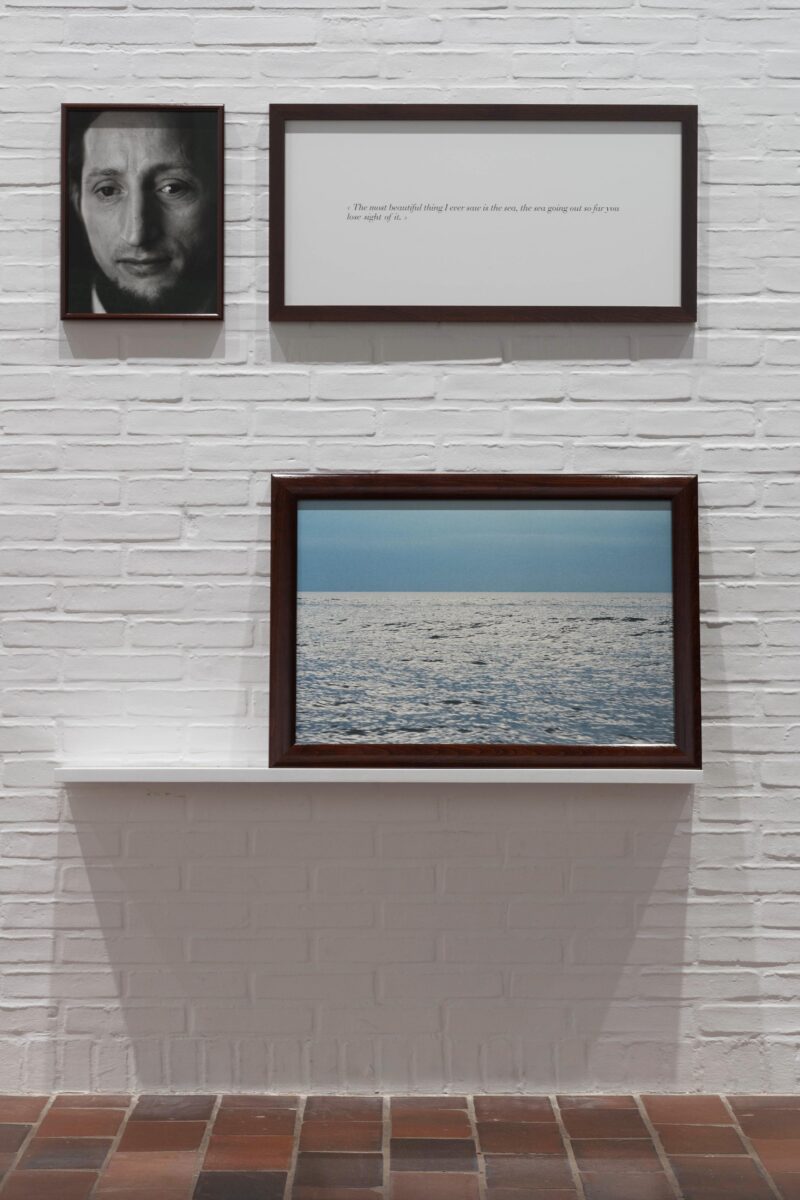
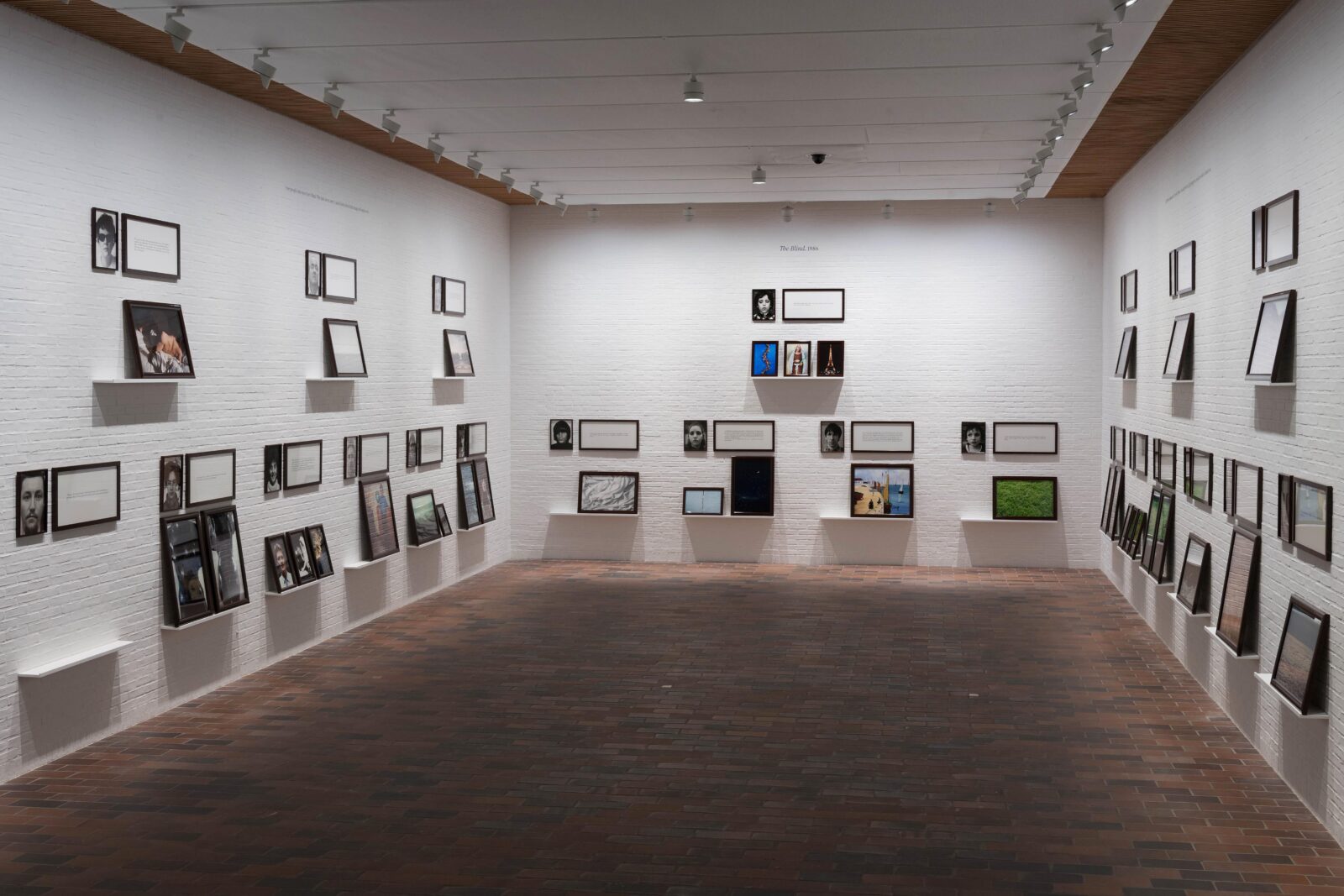
In 1986, French artist Sophie Calle visited an institute for the blind in Paris and asked the people she met there to help her create a work of art by discussing beauty and their associations with the word. Some interviews lasted for hours. Calle took notes, which she later condensed into a succinct sentence or two, such as the following words from a young boy: “Green is beautiful. Because every time I like something, I’m told it’s green. Grass is green, trees, nature too. I like to dress in green.” Calle photographed each person she interviewed and assembled photographs of one to three scenes or things they said they thought were beautiful. She took some of these assembled photographs herself; others were stock images or pictures she borrowed from her interviewees. For each subject, she created a wall-mounted visual assemblage she called a “chapter.” To the left of a life-sized portrait of the interviewee is a typed passage from her conversation with them, surrounded by ample white space. Text and images are given equal status, framed with the same meticulous care. Propped on a ledge below are the photographs Sophie selected as illustrations of what the subjects found beautiful. The series consists of 23 conversations and over 80 images. Except for the two opening “chapters” and the last one, Calle allows the series to be presented in any order.
(26 March – 6 September 2026)
Installation photo from the exhibition.
From the series: The Blind, 1986.
Photo: Camilla Stephan / Louisiana Museum of Modern Art
She began the work in 1986 and completed it for a 1989 exhibition at a Los Angeles art gallery. Three copies of the entire work exist: two in English and one in French. Calle possesses the French-language edition; the Art Institute of Chicago has one of the English-language editions; and the other was recently acquired by the Louisiana, where it is currently on view as part of the Calle exhibition. Since its first showing, The Blind has been exhibited in its entirety over a dozen times (individual pieces from the series have appeared more often), making this early work one of Calle’s most frequently seen.
In general, Calle’s work is provocative, but in the thirty-five years since The Blind was exhibited in Los Angeles, it remains her most controversial series. In 1991, after the artist and disability activist Joseph Grigely saw it at a gallery in New York, he visited the exhibition repeatedly over about a month and wrote thirty-two “Postcards to Sophie Calle,” a collection of notes on disability and art that remains a deeply influential text to this day. In brief entries, he attempts to grapple with why he finds The Blind so problematic, summing up his complex thoughts in his final sentence: “Perhaps, Sophie, you might someday return what you have taken, might someday undress your psyche in a room frequented by the blind, and let them run their fingers over your body as you have run your eyes over theirs.” Other artists, writers, critics, and scholars have followed suit with their own responses to The Blind, including Matthew Witkovsky, who said in a 2022 lecture about the series: “The trickiest aspect of this work is that Sophie, as a sighted person, has an edge on her subjects that goes beyond the position of authoring her own work… She doesn’t give back the way they give to her. And even if she made clear the terms of the pact when she met them—and I have no doubt that she did—the pact itself can seem unequal or maybe unjust.”
(26 March – 6 September 2026)
Installation photo from the exhibition.
From the series: The Blind, 1986.
Photo: Camilla Stephan / Louisiana Museum of Modern Art
Since The Blind is a seminal work at the intersection of vision loss and art, a subject I have been researching for over a decade on behalf of the American Macular Degeneration Foundation, I had long wanted to see the series and took the opportunity to do so this summer as part of the larger exhibition Sophie Calle: Something Missing? Even before going to the exhibit, I found the title troubling, as calling it The Blind implies that those without sight share a single sense of darkness, one that sets them apart from those who are sighted. This sense that the subjects in the series were grouped together as a monolithic other is emphasized by Calle’s decision not to give us the names of the people she interviewed or to tell us the cause and degree of their blindness. “I met people who were born blind,” she writes in the introduction to the exhibition. “Who had never seen. I asked them what their image of beauty was.” The seeming straightforwardness of “Who had never seen” feeds the false notion that people who are blind are completely lacking in all visual perception or residual sight. In fact, only about ten percent of those considered blind are unable to register light. There are dozens of diseases and hundreds of rare genetic disorders that cause severe vision loss. The effect of any one of them on human sight is by no means the same from one individual to another. Take the case of macular degeneration. While the macula and central vision of anyone with macular degeneration are damaged, that damage does not result in a homogeneous loss of vision across individuals. People with macular degeneration have strikingly varied visual experiences. Some lose their ability to see color, some do not. Some find that a cloud obscures their central vision, some do not.
(26 March – 6 September 2026)
Installation photo from the exhibition.
From the series: The Blind, 1986.
Photo: Camilla Stephan / Louisiana Museum of Modern Art
When I finally saw The Blind, I found more cause for misgivings. The photographic portraits Calle took, larger-than-life-size close-ups of her interviewees’ faces, draw attention to their eyes in a way that feels uncomfortably objectifying. In “Postcards to Sophie Calle,” Grigely, too, finds these portraits problematic. “Something seems wrong to me,” he writes. “I am able to gaze, look, stare into the faces, into the eyes, of faces and eyes that cannot stare back. ‘Subjects,’ they are called. I feel I am in the presence of a social experiment… I am uncomfortable.” Grigely quotes a passage from John Hull’s great memoir on losing his sight, Touching the Rock: An Experience of Blindness (1990), in which Hull writes: “I sometimes feel [the desire] quite strongly to hide my face from others. Is this a primitive desire to find some kind of equality? Since your face is not available to me, why should my face be available to you?”
To support his sense that something is wrong with these portraits and, by extension, Calle’s relationship to her interviewees, Grigely quotes a passage from a 1990 notice about The Blind in The New Yorker that reads, “[In Sophie’s pictures of them], some of these people look blind, some of them don’t.” This quote enrages Grigely. It makes him think about Paul Strand’s photograph of a blind woman with a placard reading BLIND around her neck, which I wrote about in my 2018 article at the Vision & Art Project (V&AP) as an example of how negative representations of blindness haunt Western art—and, by extension, artists with vision loss, leading to the kind of stigma that we hope to challenge at the V&AP. Grigely writes, “Would The New Yorker say of Robert Mapplethorpe’s photographs, ‘Some of these people look homosexual, some of them don’t’?” It is unbearable to him that the blind might be thought to bear “visible signs of identity,” which he sees as depriving them of their “real lives,” as he puts it, replacing them with “lives filtered through the ideologies of able-bodied people.”
The framed passages from Calle’s interviews make clear that, to whatever degree the interviewees may be visually impaired, they have a profound relationship to beauty and the visual. They also show how the word beauty and “the visual,” so to speak, are often conflated and arise from an imaginative, multisensory engagement with the world, true not only of those who are blind but also those who see, which is one of the many reasons why full sightedness is not a prerequisite for making art. The young boy quoted earlier knows that green is beautiful because it is the color of nature and everything he loves, thus connecting beauty to love. The man who says that “the most beautiful thing [he has] ever seen is the sea, the sea going out so far you lose sight of it,” seems to have some visual perception but connects beauty to a sense of the infinite. The man who loves to “take in” “the sequence of the gardens, the pools, the artificial lakes” through the gallery of mirrors at Versailles also has some residual sight, since he describes apprehending the general effect and finds beauty in pattern and design. The young woman, a reader of novels, who says, “A starlit sky must be beautiful. They say a star is a light but maybe it has things inside,” finds the beautiful in abstract thought and the imaginative. The woman who says, “the word ‘blue,’ just saying it, is beautiful,” hints at the role of sound in the visual, and the one who says, “Lynx fur… has to be beautiful,” hints at the role of touch, a testament to how intertwined the senses are.
To some extent, Calle deserves credit for interviewing these people and editing their words into brief passages that are, by turns, penetrating, playful, poignant, and thought-provoking. She conducted her interviews in the late 1980s, before the disability rights movement prompted society to examine its assumptions about people with disabilities. These interviews certainly show that being blind is not a barrier to apprehending beauty, which may have been a revolutionary insight at the time. Yet what Grigely called the “inscribed voices” of the blind are ultimately hijacked by Calle’s photographic interpretations of those voices. The words of the blind draw us into their worlds and allow us to draw them into ours, sharing the profundity of beauty across all other human barriers that might exist between self and other. The portraits Calle has taken of them, however, and her photographic interpretations “reveal not so much the voices of the blind as the voice of Sophie Calle.” The images Sophie chose to illustrate her interviewees’ descriptions of what they found beautiful were nearly always tonally off-key with the quoted passages. The words of the blind are by turns sincere, poignant, searching, funny, and straightforwardly honest, while Calle’s image choices are nearly always either so literal as to undermine the nuance of her interviewees’ words or are impudent, flippant, playful—that is, invariably in the register of what has become Calle’s signature “mischievousness.”
(26 March – 6 September 2026)
Installation photo from the exhibition.
From the series: The Blind, 1986.
Photo: Camilla Stephan / Louisiana Museum of Modern Art
Aside from the tonal mismatch that leads Calle to essentially claim possession of the words of the blind, her choice of images to accompany the interviewees’ descriptions of what they find beautiful was presumably something they could not register because they did not have enough functional vision to see them. This is reminiscent of the deep irony of Constantin Brâncuși’s Sculpture for the Blind, which is permanently displayed inside a glass vitrine at the Philadelphia Museum of Art and thus can be viewed only by sighted museum-goers. “Why have you transcribed the voices of the blind into a medium to which they do not have access?” Grigely asks. “[T]he gaze that acts under the guise of curiosity, like colonialist curiosity, is actually a gaze of violence.”
Yet this is only one of the ways The Blind is inaccessible to those with low vision. While the portraits that draw attention to the interviewees’ otherness are larger than life size, their words are printed in relatively small text that can be hard to read and are not accompanied by braille. Surprisingly, there were no dedicated standalone audio descriptions listed for the blind or visually impaired, specifically tailored for the show, though the museum provides general exhibition guides and introductory video materials via the Louisiana Channel. I compare this to an exhibition I saw earlier this year at the Henry Moore Institute, Beyond the Visual, the UK’s first major sculpture exhibition in which blind and partially blind practitioners were central to the curatorial process and made up most of the participating artists. The exhibition challenged the dominance of sight in the making and appreciation of art and welcomed blind and partially blind visitors through extensive accessibility initiatives that enriched the experience of the art for everyone, regardless of how sighted or low-sighted. By comparison, despite Calle’s widely held status as avant-garde, The Blind feels old-fashioned, made at a time before the American Disabilities Act became law in 1990, and exhibited now as if a movement had never wrought the changes in our culture that this law codifies. Sadly, Grigely’s 1991 words remain more applicable than I wish they were: “My concern just now is about why the disabled as a social group have made little progress in becoming a central part of our social consciousness. I mean, Sophie, when people talk about ‘multiculturalism,’ they seem to mean everyone except the disabled—we’re something else. Something else.”
It would be wrong to end this review, however, without looking more deeply into Calle’s relationship to The Blind and the work she has since done, because, although I find this particular work deeply problematic, her connection to blindness and to seeing is by no means shallow or simplistic. Back in 1991, Grigely had a copy of his “Postcards” forwarded to Calle. Shortly afterward, they met in person, and, at her behest, sixteen of the “Postcards” were published in 1993 in Parkett, an influential international art magazine. This shows she has not resisted participating in a critique of her own work, which over the course of fifty years has repeatedly involved using blind people as subjects. In 1991, the year Grigely wrote his “Postcards,” Calle created Blind Color. For this work, she asked “blind people” what they saw and compared their descriptions with artists’ texts about the monochrome. In 2010, she created The Last Image and asked blind people whose loss of sight had been sudden to describe the last thing they saw. Selections from all three series were published in braille by Actes Sud (2012). The book is dedicated to her father: “To Bob Calle, who helped me to see.” It is hard to know for sure, since Calle rarely comments on her own work, but making some of these works accessible in this book via braille may be in part a response to criticisms that her work about the blind is not accessible to them.
In a recent Instagram video, Calle talks to the Louisiana Art Museum about The Blind and says that the idea for the series came to her when she saw a blind person crossing the street in front of a school for the blind and overheard them saying that they had seen “a beautiful movie” the day before. She says she waited a year before doing the project, however, because she was “afraid of the cruelty of the phrase—ask somebody that has never seen—‘What is the most beautiful thing you saw?’” In another rare commentary on the subject, she said in a 2014 interview that when she began working on The Last Image (2010), she was concerned about how her interactions with blind people might feel to them. “When I was asking blind people about their memory of the last time they saw something I was very afraid that it would be a cruel thing to do. That was, until I asked the first blind person and for him it was so natural a question I realised that it was provocative for people who could see but not for the blind themselves.” As someone who has interviewed several legally blind artists, the experience Calle recounts resonated with me. When I first began my work, I felt as if I were overstepping, intruding, being insensitive by asking artists what they could see and how they felt about losing their vision. But it very quickly became obvious that the discomfort belonged to me and that most of my interview subjects wanted to talk about what they could see. In fact, for many their changing eyesight was a subject of keen interest to them; they wanted to speak about it.

(26 March – 6 September 2026)
Sophie Calle, See more. Old Man, 2011 (detail), ©Sophie Calle / VISDA, Paris, 2026.
Courtesy of the artist and Perrotin
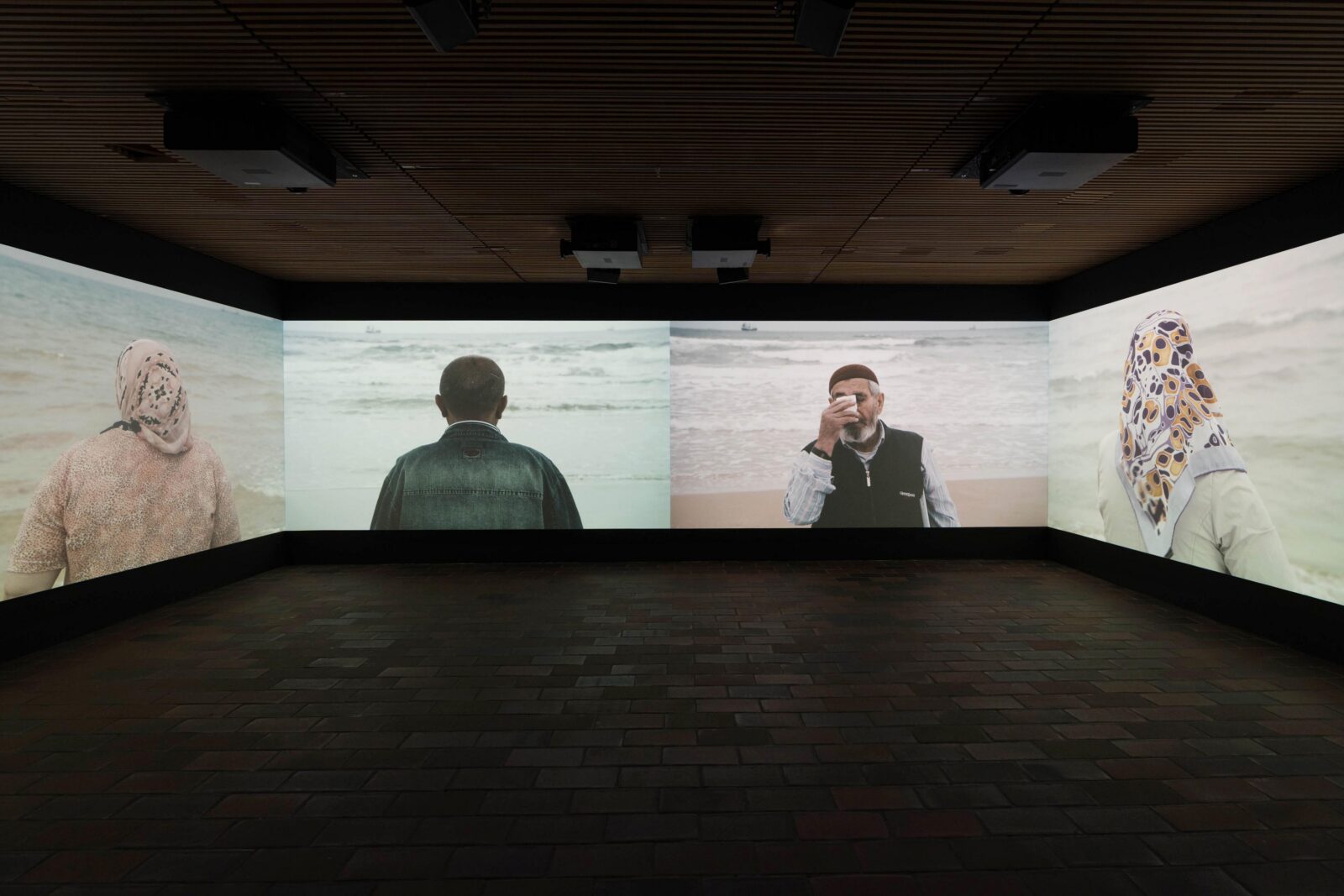
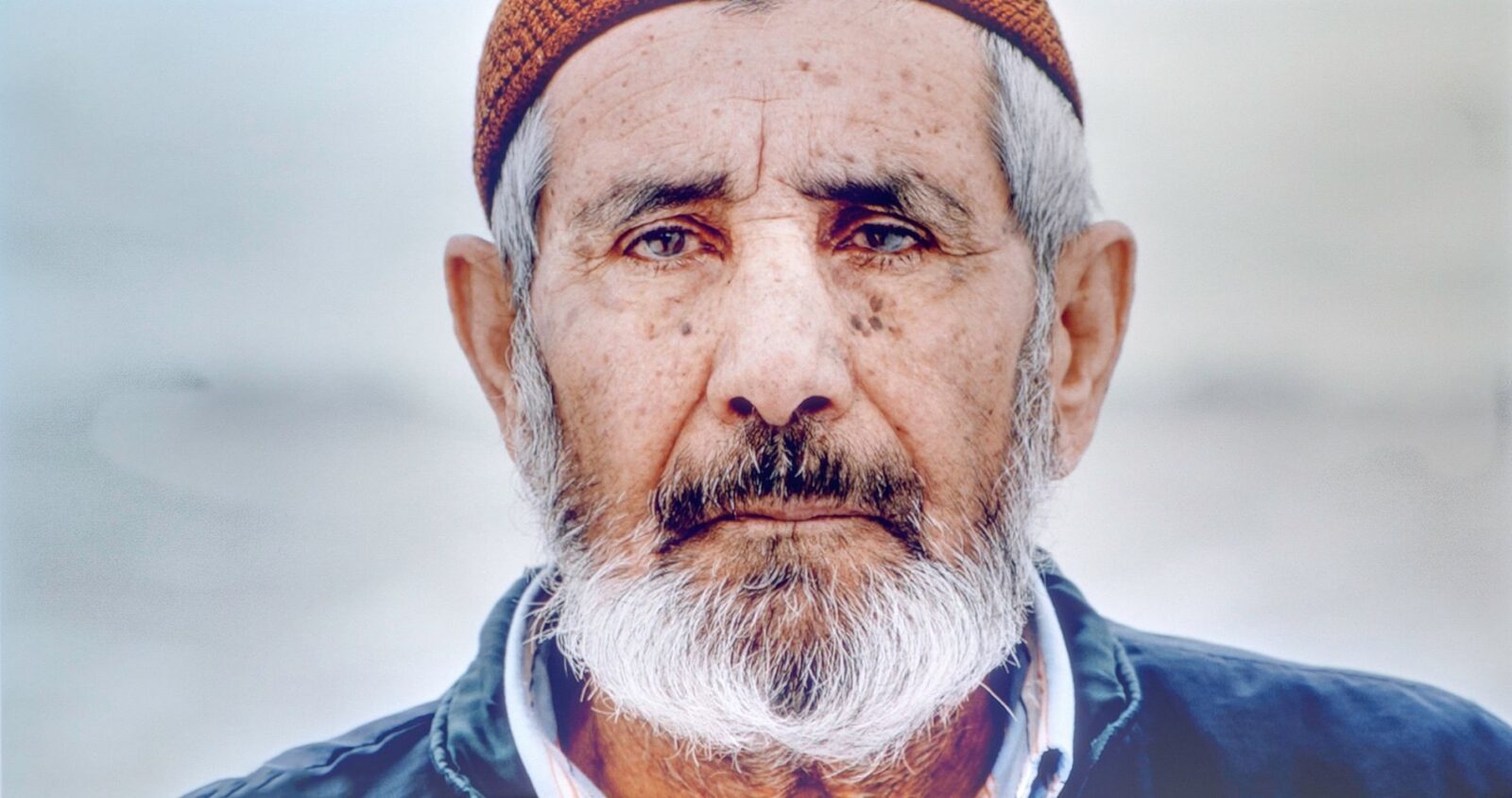
Beyond her explicit interest in sight and blindness, a recurring theme in Calle’s work, as Tine Colstrup writes, is “the relationship between the visible and invisible… the development of images and visual memories by language in the darkroom of the mind.” For almost fifty years, Calle’s work has explored the act of seeing, including several series shown alongside The Blind at the Louisiana Museum. Taken together, these explorations make it clear that, when viewed within the context of her larger artistic obsessions, The Blind transcends what one might fear is a voyeuristic interest in the other. In Voir la mer (2011), Calle filmed people in Istanbul seeing the sea for the first time. They stand facing the edge of that seeming infinity, their backs to the viewer, as waves crash through the gallery’s audio system. They then turn slowly and look into the camera with inscrutable gazes. In this work, unlike in The Blind, the subjects seem to return the viewer’s gaze, though what is in their eyes is difficult to apprehend. I was very interested in how these two works, at least in my mind, “spoke” to one another: In Voir la mer, the subjects gaze back, but we don’t know what they saw or thought about when they were looking out at the sea; thus their personhood remains somewhat remote; in The Blind, the subjects cannot look back, but we know what they think is beautiful, which draws us into relationship with them and helps us to know them.
(26 March – 6 September 2026)
Sophie Calle, See more. Old Man, 2011 (detail), ©Sophie Calle / VISDA, Paris, 2026. Courtesy of the artist and Perrotin
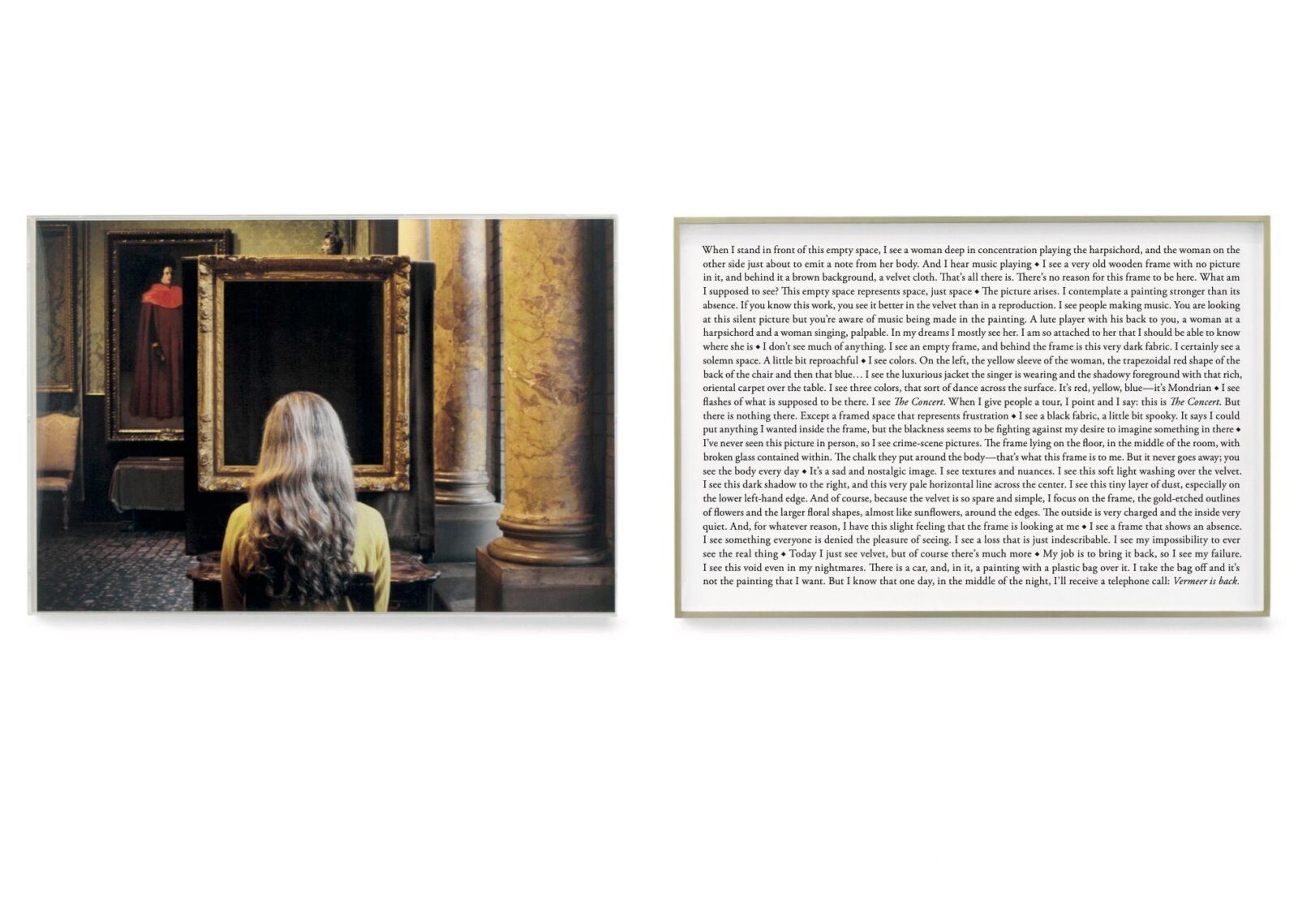
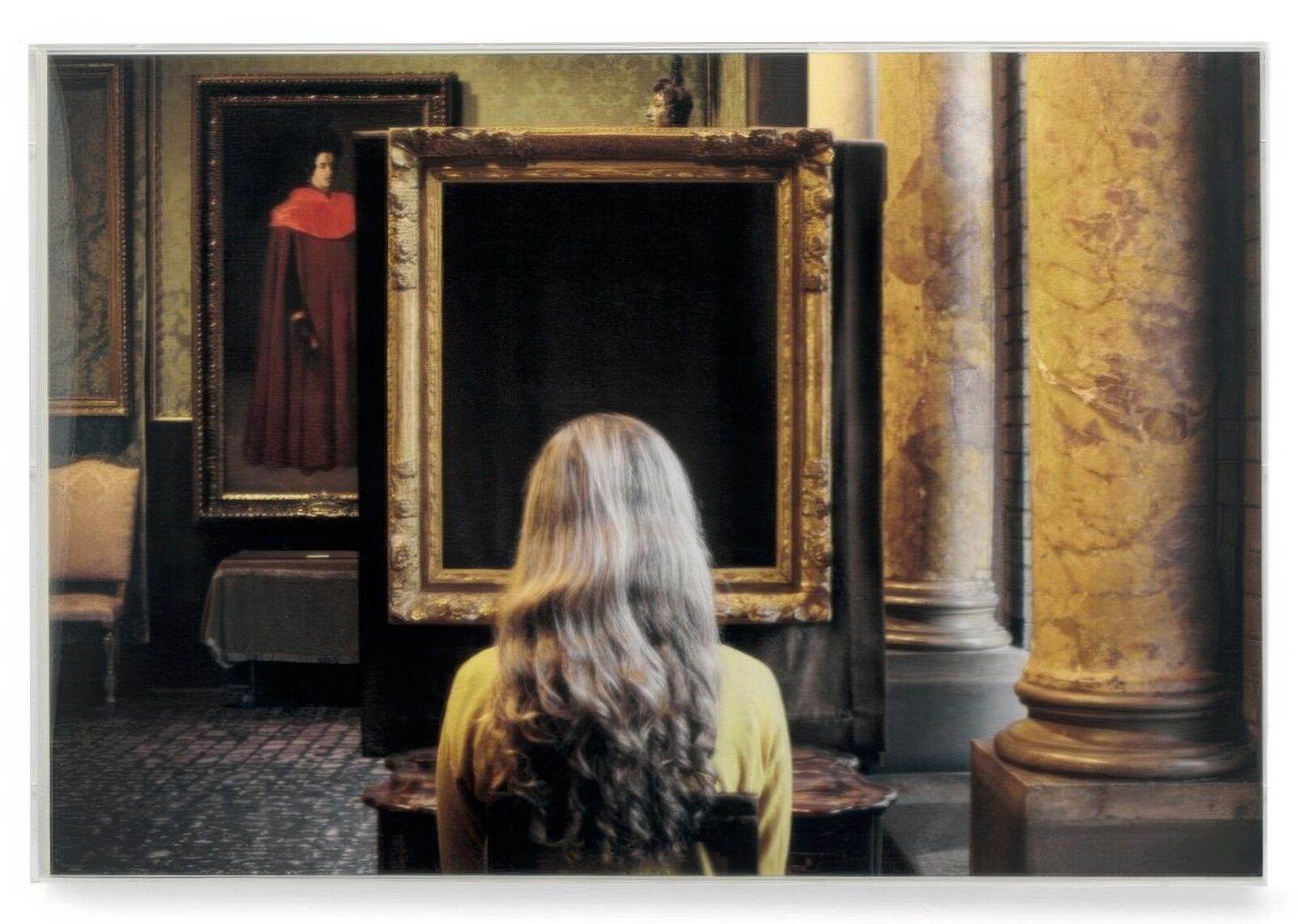
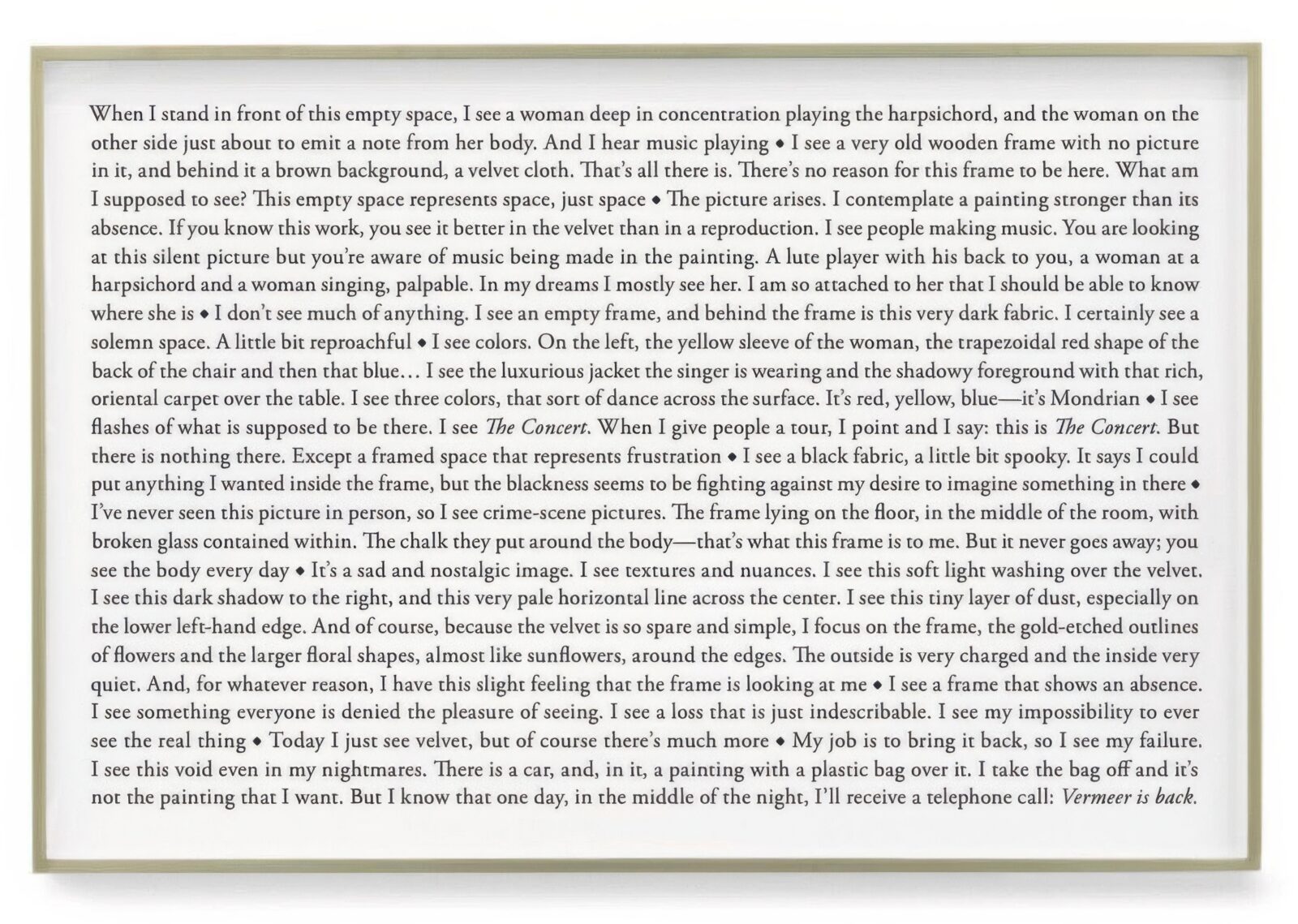
Another fascinating series about vision was What Do You See? (2013). When artworks by Vermeer, Flinck, and Rembrandt were stolen from the Isabella Stewart Gardner Museum in Boston, the canvases were crudely cut out of their frames, the frames left behind. The museum restored the frames and put them back in their original places to emphasize the works’ absence. For this series, Calle asked curators, guards, other staff members, and visitors to tell her what they saw within these frames. Their words are placed beneath photographs taken from behind, as they stare into the empty frames. “I see my reflection, so I see my sadness,” one person begins, eventually ending at the following place:
I see a painting that Mrs. Gardner bought as a Rembrandt, and it’s just a Flinck, a student of Rembrandt’s, a student of a master—it’s beautiful but it gets forgotten because people are always remembering the Rembrandts and the Vermeer. I think the thieves took it by mistake and don’t protect it as much as the others… So I see a solitary, a lonely painting. What you see is yourself.
SOFIE CALLE – SOMETHING MISSING?
(26 March – 6 September 2026)
Sophie Calle, What Do You See? The Concert. Vermeer, 2013, ©Sophie Calle / VISDA, Paris, 2026. Courtesy of the artist and Perrotin
What Do You See? emphasizes the beauty that comes from seeming absence, bringing us back to The Blind and Grigely’s insights into what he felt was most important to understand about it: “I do not know who… the author of this work really is.” The advertisements read ‘Sophie Calle,’ but I am inclined to feel that the real artist in this room is not Sophie Calle but the blind themselves, for it is they who do what the artist must necessarily do: find beauty where others do not presume it to be.”
(26 March – 6 September 2026)
Sophie Calle, What do you see? The Concert. Vermeer, 2013 (detail)
©Sophie Calle / VISDA, Paris, 2026.
Courtesy of the artist and Perrotin
Sophie Calle: Something Missing? is on view at the Louisiana Museum of Modern Art (Humlebaek, Denmark) through September 6, 2026. It will move to Turner Contemporary (Margate, England) beginning on October 3 and to the Du Pont Museum (Tilburg, Netherlands) in March 2027.
Leave a Comment